


Frailty, infections, and bispecific antibodies in multiple myeloma: redefining supportive care in the era of T-cell redirection


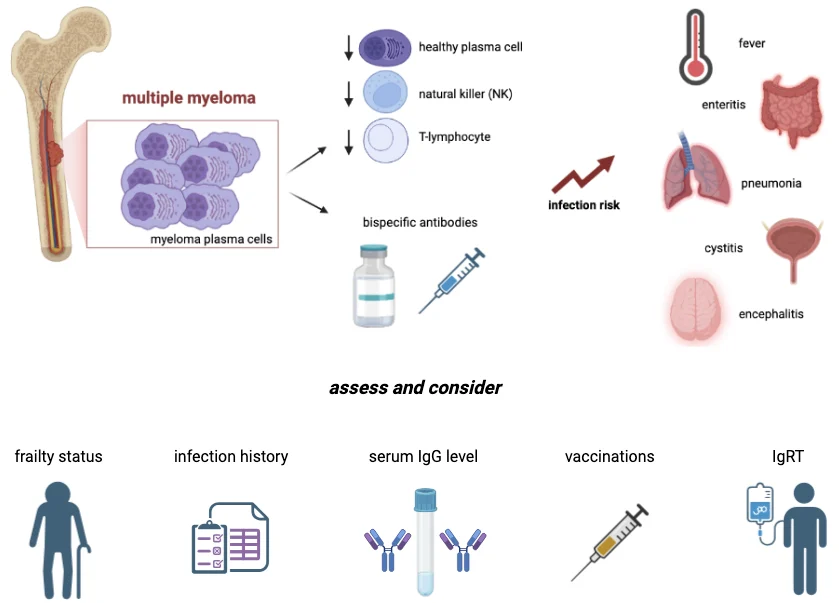
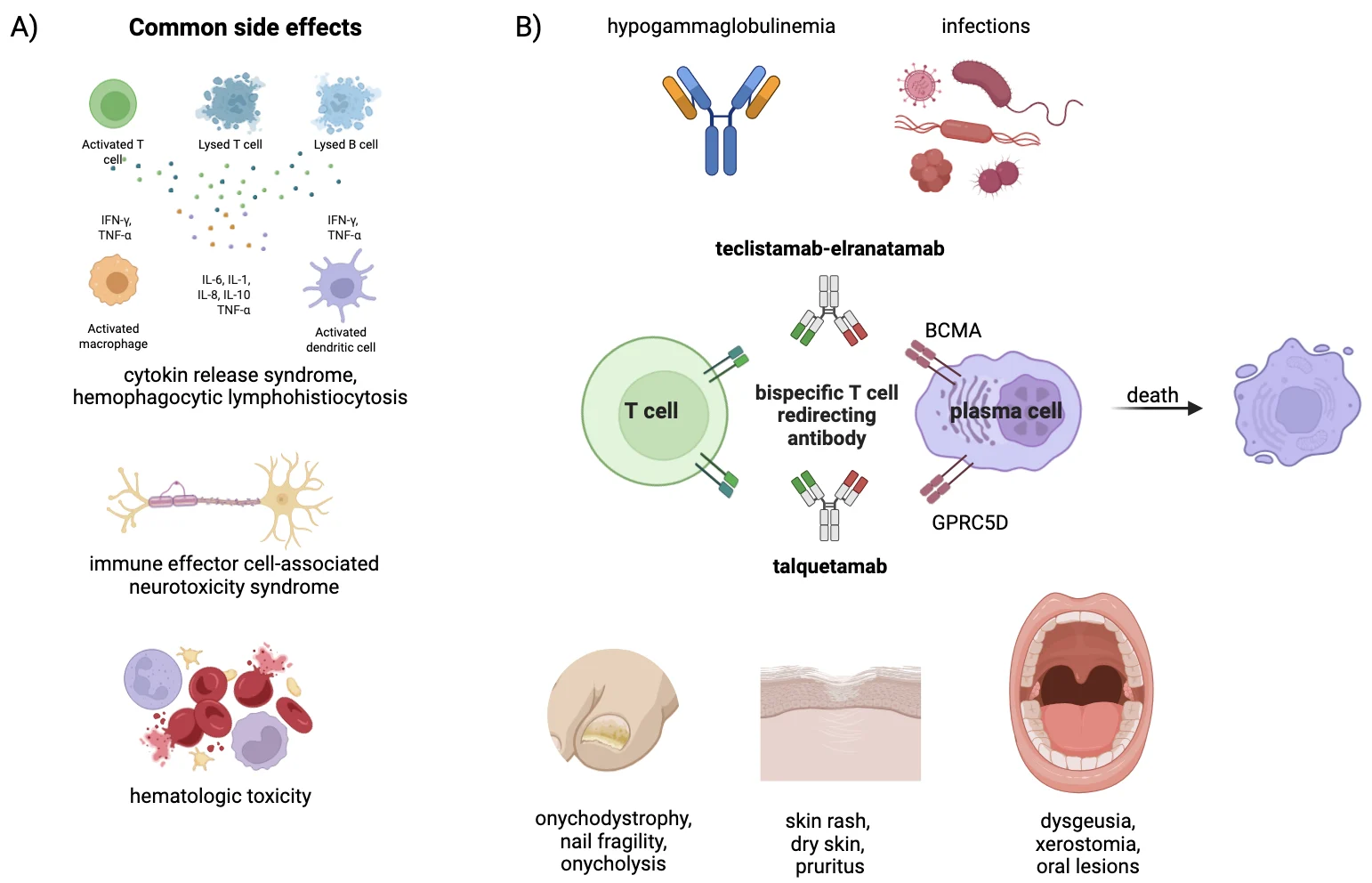
Multiple myeloma (MM) is a plasma cell malignancy characterized by profound immune dysfunction, predisposing patients to severe infections. Disease- and treatment-related immunosuppression, particularly with proteasome inhibitors, immunomodulatory agents, anti-CD38 antibodies, and bispecific T-cell redirecting antibodies, further exacerbate vulnerability. Frailty, reflecting reduced physiological reserve and cumulative comorbidities, has emerged as a critical determinant of infectious risk, independent of chronological age or apparent clinical fitness. Evidence from ALCYONE and MAIA trials demonstrates that frail patients experience higher rates of severe infections, yet paradoxically, infection rates among seemingly robust patients may approximate those of frail individuals, highlighting limitations in conventional risk stratification. Bispecific T cell redirecting antibodies impose sustained immune perturbations, including B-cell aplasia, hypogammaglobulinemia, and T-cell dysregulation, amplifying infection susceptibility and treatment-related morbidity. Growing clinical and translational evidence indicates that immunoglobulin replacement therapy (IgRT), particularly when administered preemptively, substantially reduces infection rates in patients receiving anti-BCMA bispecific T cell redirecting antibodies. Real-world and mechanistic studies demonstrate that IgRT restores humoral protection and mitigates severe infectious complications, supporting its integration as a central preventive strategy rather than a reactive rescue measure. Integrating frailty assessment with proactive immunologic support represents a precision medicine approach to infection prevention, guiding prophylaxis, monitoring, and early intervention. Future strategies should combine longitudinal frailty evaluation, immune profiling, and disease- and treatment-related factors to optimize individualized infection-risk management in MM patients treated with T-cell–redirecting therapies. Aligning therapeutic innovation with targeted supportive care is essential to maximize efficacy, safety, and durable outcomes in this vulnerable population.
Funding
No Funding
Acknowledgments
We acknowledge this guy
Data Availability
Some statement
SUPPLEMENTARY MATERIAL
How to Cite
Solimando AG, Spataro F. Frailty, infections, and bispecific antibodies in multiple myeloma: redefining supportive care in the era of T-cell redirection. OncoDaily Med J. 2026;3(1).